

Filters
6 products


Installment Plans
0% Interest


Installment Plans
0% Interest

Installment Plans
0% Interest
Installment Plans
0% Interest
Installment Plans
0% Interest
Installment Plans
0% Interest
EV Chargers in Egypt — Home Charging Stations, 7kW to 22kW, Cables & Installation

If you've just bought an electric car in Egypt — or you're about to — the first real question is rarely about the car. It's about how you'll charge it. Most public stations are still concentrated around malls, hotels, and a handful of highways, which means the EV charger you install at home is the difference between an easy ownership experience and a frustrating one.
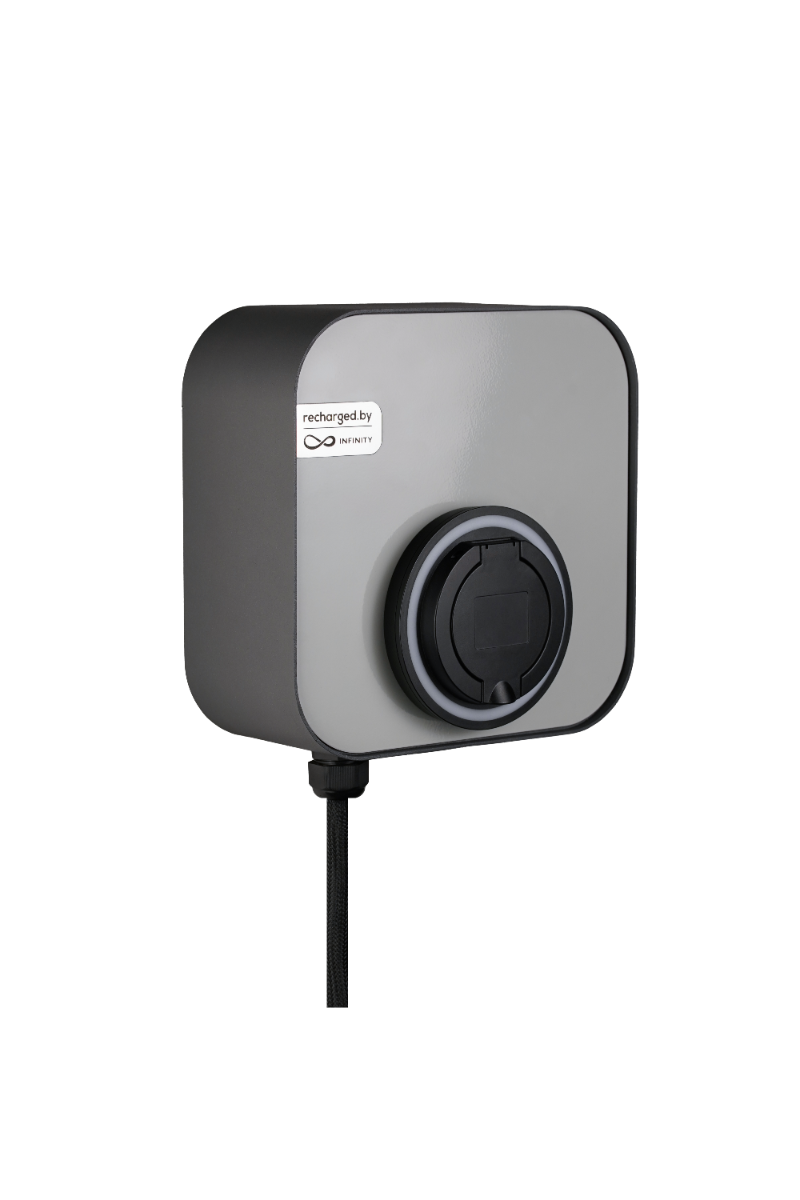
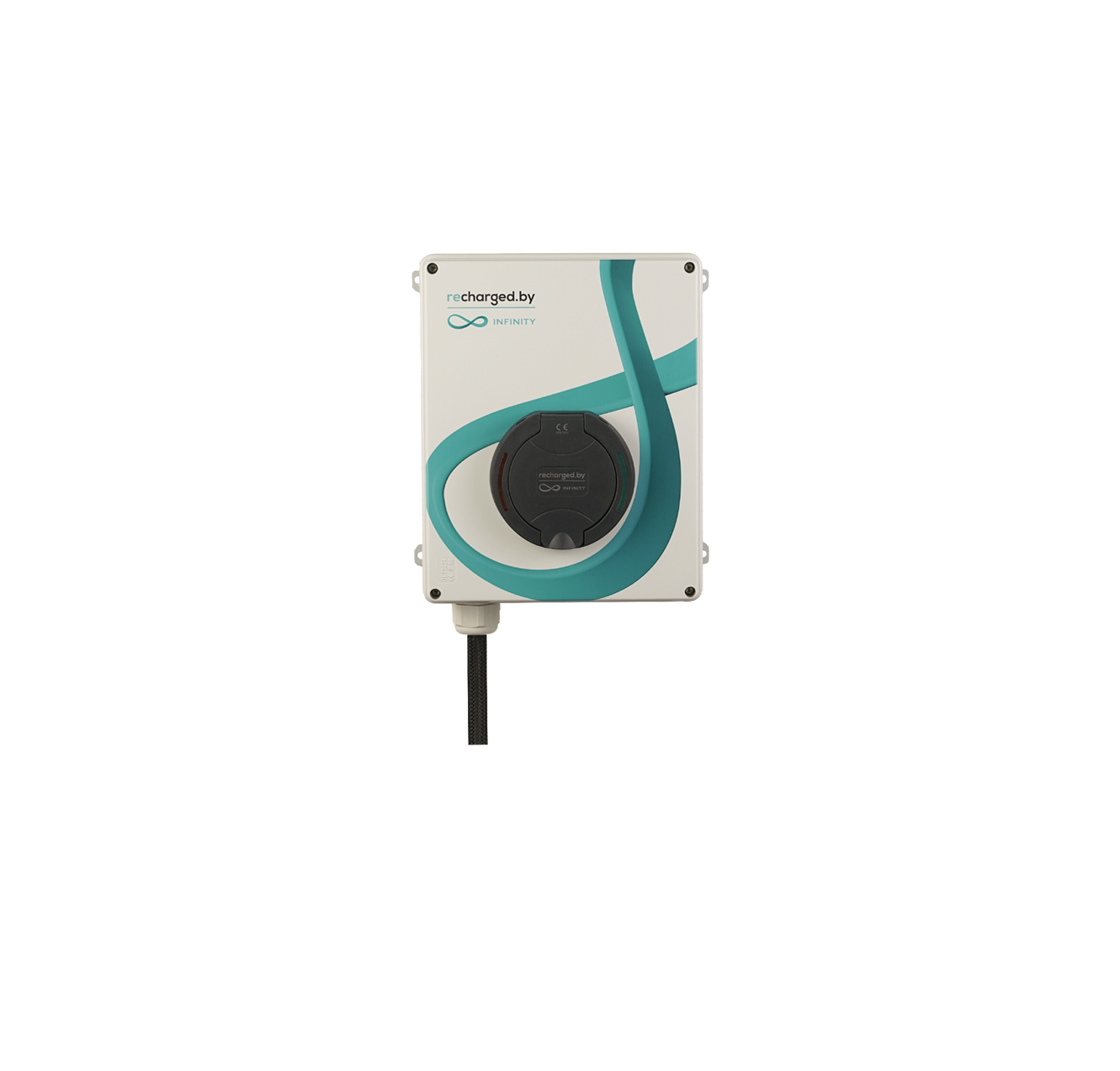
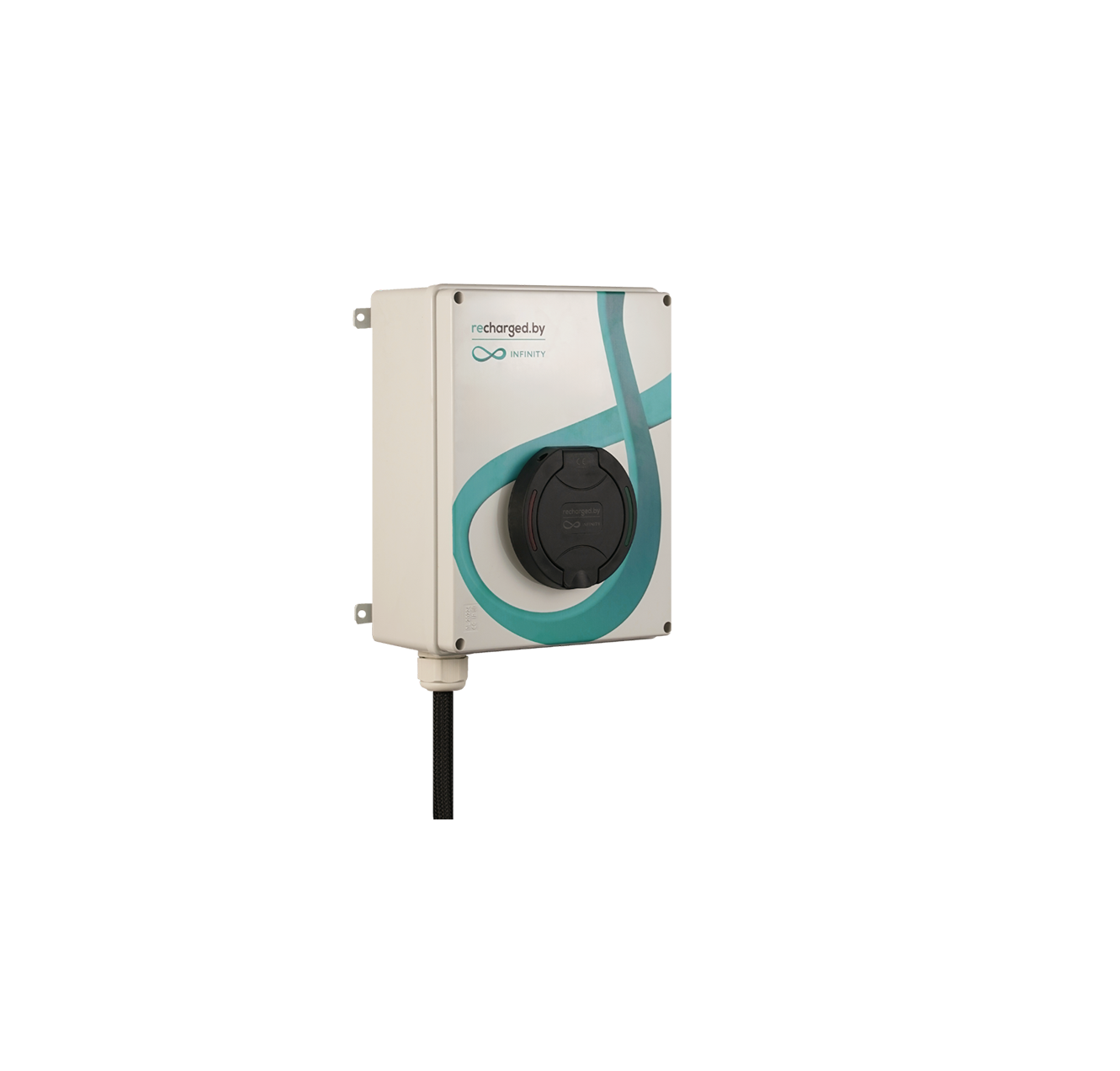
XPRS is the authorised retailer for the Recharged by Infinity FlexiCharge range in Egypt, alongside the Type 2 and GB/T cables you'll need to actually plug into your car. Every charger ships with an official Infinity warranty and 0% interest payment plans through CIB, Banque Misr, and Valu. We carry the 7kW models that suit most apartments and the 22kW three-phase stations that villa owners and heavy commuters reach for. Cables come in both the European Type 2 standard used by Tesla, BMW, MG, Geely, and Volvo, and the Chinese GB/T standard used by BYD, Dongfeng, and Forthing.
Everything on this page is sold and serviced inside Egypt. No grey-market imports, no warranty headaches, no waiting for parts.
Why Buy Your EV Charger from XPRS
- Official Recharged by Infinity warranty (2–3 years)
- Installation arranged by Infinity after purchase
- Infinity-certified engineers, EgyptERA-compliant
- 0% interest plans via CIB, Banque Misr, Valu
- 8 physical XPRS stores in Cairo, Giza, Alexandria, North Coast
- XPRS after-sales support: 19857 · sales@myxprs.com

How EV Charging Actually Works
An electric car stores its energy in a battery measured in kilowatt-hours (kWh) — the same unit your electricity bill uses. When you plug your car in, electricity flows from the wall to your car's battery through a device called an EVSE (Electric Vehicle Supply Equipment), which is the technical name for what most people just call "an EV charger."
Here's the part that confuses people: the wall outlet supplies AC (alternating current), but your battery stores DC (direct current). Conversion happens in one of two places. With a home charger, your car's on-board charger does the conversion, which is why home charging speed is capped by what your car can accept — usually somewhere between 7kW and 22kW. At a public DC fast-charging station, the conversion happens inside the station itself, which is why those units can pump 50kW or more straight into the battery in minutes.
What this means in practice: buying a 22kW home charger doesn't automatically mean your car charges at 22kW. The car's on-board charger has the final say. We'll cover this in the "How to choose" section below.
The Three Charging Levels (and Where Egypt Fits)
Charging is grouped into three levels worldwide, defined by power output and how fast they refill a battery.
- Level 1 — Standard wall outlet. Plug your car into a regular 220V household socket using the cable that came in the boot. You'll add roughly 10 kilometres of range per hour of charging. Useful as a backup. Not realistic as a daily solution if you drive more than 30 km a day.
- Level 2 — AC home and public wall-box charging. This is the sweet spot for Egypt. Power ranges from 3.7kW (basic) to 22kW (three-phase). Every Recharged by Infinity FlexiCharge on this page is a Level 2 charger. A typical 60kWh EV gains around 40 km of range per hour on a 7kW unit, or roughly 130 km per hour on a 22kW unit. Most public AC stations at malls and hotels also sit in this band.
- Level 3 — DC fast charging. Power from 50kW up to 360kW. You'll find these at Infinity, Elsewedy Plug, and EVIQ stations along the Cairo–Sokhna, Cairo–Alex, and Cairo–North Coast routes. A DC station can take a depleted battery to 80% in roughly 25 to 35 minutes. DC fast chargers are public infrastructure — they're not installed in private homes because they need industrial three-phase supply and large transformers.
For most Egyptian EV owners, the answer is straightforward: a Level 2 home charger for daily use, and the DC public network for long road trips.
How Long Does It Take to Fully Charge?
Charging time depends on three things: your car's battery size, the charger's output, and the maximum charging rate your car accepts. The table below shows realistic time from empty to roughly 80% — the point at which most EVs slow down to protect battery health.
|
EV battery |
Level 1 (2.2kW) |
7kW home |
22kW home |
100kW DC public |
|
40 kWh (MG4 EV, BYD Atto 3) |
~16 hours |
~5 hours |
~2 hours |
~20 minutes |
|
60 kWh (Tesla Model 3, Geely Geometry C) |
~24 hours |
~7 hours |
~3 hours |
~25 minutes |
|
77 kWh (Tesla Model Y Long Range) |
~30 hours |
~9 hours |
~4 hours |
~30 minutes |
|
85 kWh (BYD Han) |
~34 hours |
~10 hours |
~4.5 hours |
~35 minutes |
These are real-world numbers, not lab figures. They account for the slowdown that happens as the battery fills, charging losses through the cable, and the fact that your car's on-board charger is the bottleneck on AC.

How to Choose the Right EV Charger
Skip the marketing for a moment. The right charger is whichever one matches your car, your home's electrical supply, and how you actually drive. Work through these four questions in order.
Step 1 — Check What Your Home Supplies
Single-phase 220V is standard in Egyptian apartments. If that's your supply, the practical ceiling is a 7kW charger, regardless of which brand you choose. Three-phase 380V is common in villas, newer compounds, and most North Coast and Sokhna properties. Three-phase unlocks the 22kW option.
How to check quickly: look at your breaker panel. A single-phase supply has one main breaker labelled around 60–100A. A three-phase supply has three main breakers — usually side-by-side and matched. If you're not sure, Infinity's pre-installation survey (arranged after your XPRS purchase) confirms it before any work starts.
Step 2 — Check What Your Car Accepts
Every EV has a maximum on-board AC charging rate, listed in the owner's manual or on the manufacturer's spec sheet. Most modern EVs sold in Egypt accept somewhere between 7kW and 11kW on AC. A few — like the Tesla Model 3, Model Y, and BYD Han — accept up to 11kW. Buying a 22kW home charger for a car that caps at 7kW is fine (it just charges at 7kW), but you're paying for headroom you may not use unless you upgrade vehicles later.
A short reality check for the Egypt market:
|
Car |
Max AC rate |
Practical home charger |
|
Tesla Model 3 / Model Y |
11 kW |
7kW or 22kW (futureproof) |
|
MG4 EV / MG ZS EV |
7.4 kW |
7kW |
|
BYD Han / BYD Atto 3 / BYD Seal |
7 kW–11 kW |
7kW or 22kW |
|
Geely Geometry C |
6.6 kW |
7kW |
|
Mercedes EQ range |
11 kW |
7kW or 22kW |
|
Hyundai Ioniq 5 / KIA EV6 |
11 kW |
7kW or 22kW |
Step 3 — Match the Connector
Cars sold in Egypt use one of two connectors. European, American, Korean, and Tesla EVs use Type 2 (also called Mennekes). Chinese-market EVs — most BYD, Dongfeng, and Forthing models — use GB/T. The charger is the same; only the cable changes. We sell both. If you switch brands later, you replace the cable, not the wall unit.
Step 4 — Decide Whether You Want a Smart Charger
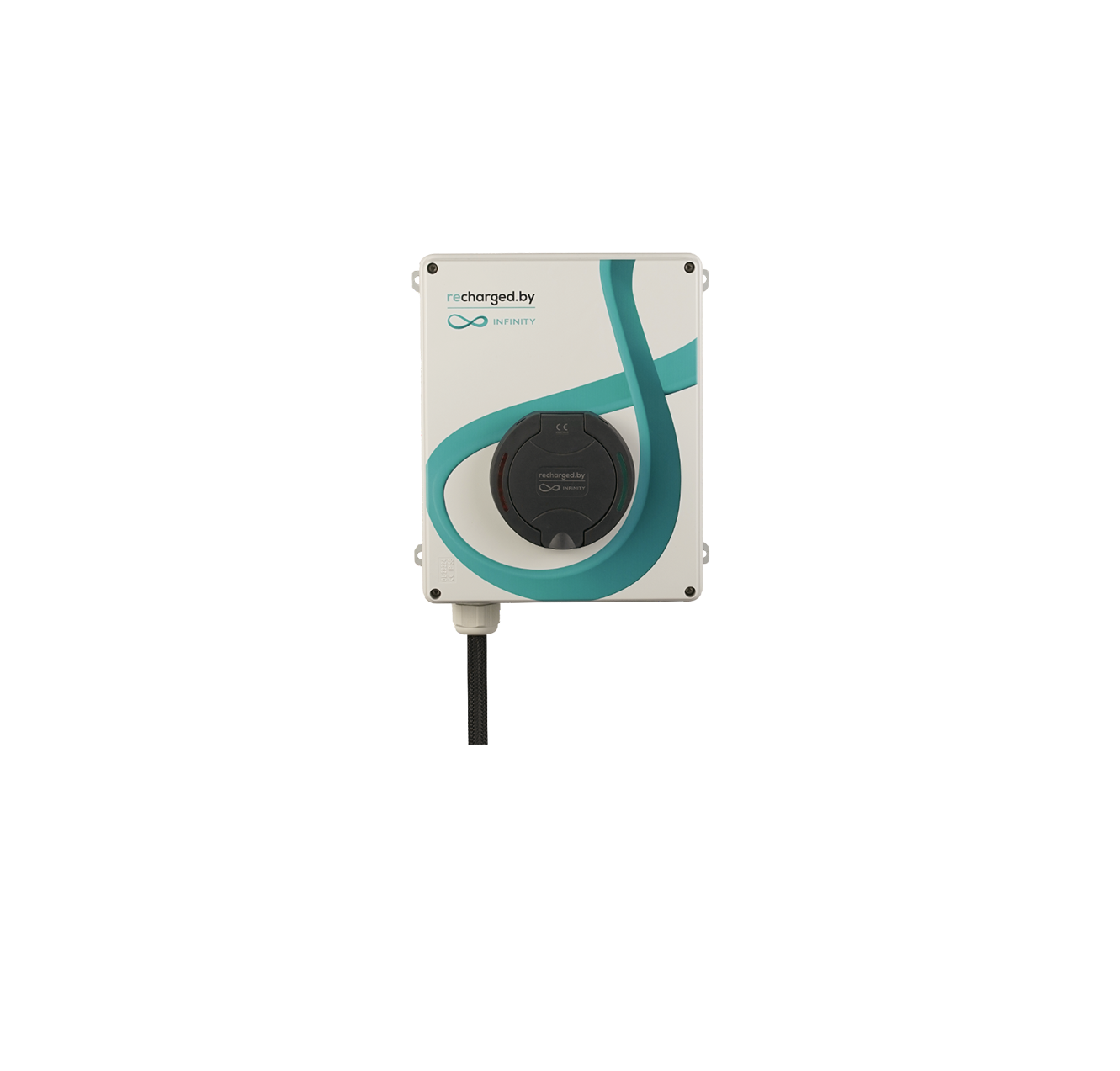
Eco models are plug-and-charge — you connect the cable, the car charges, you unplug. Simple, reliable, no app required.
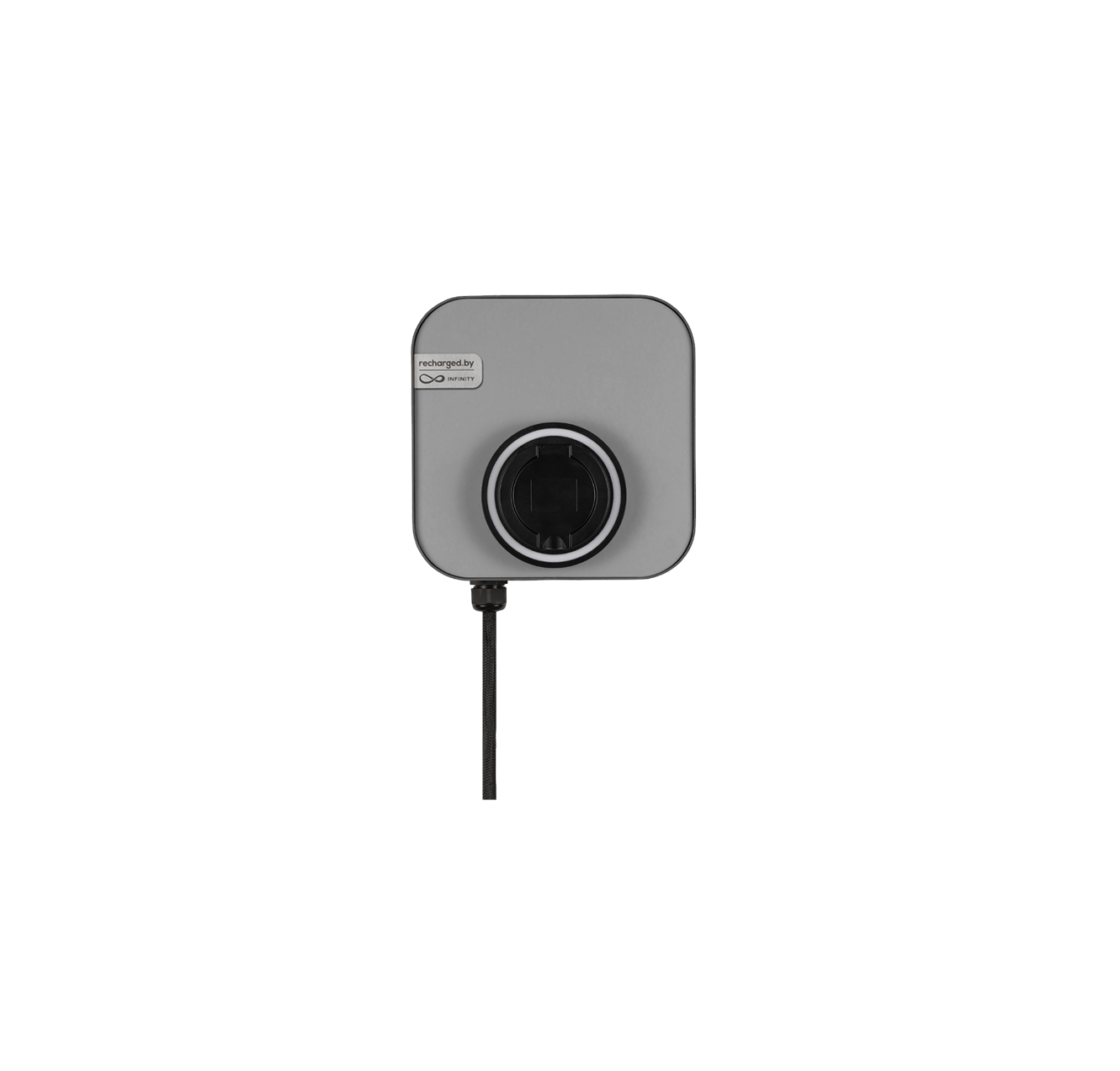
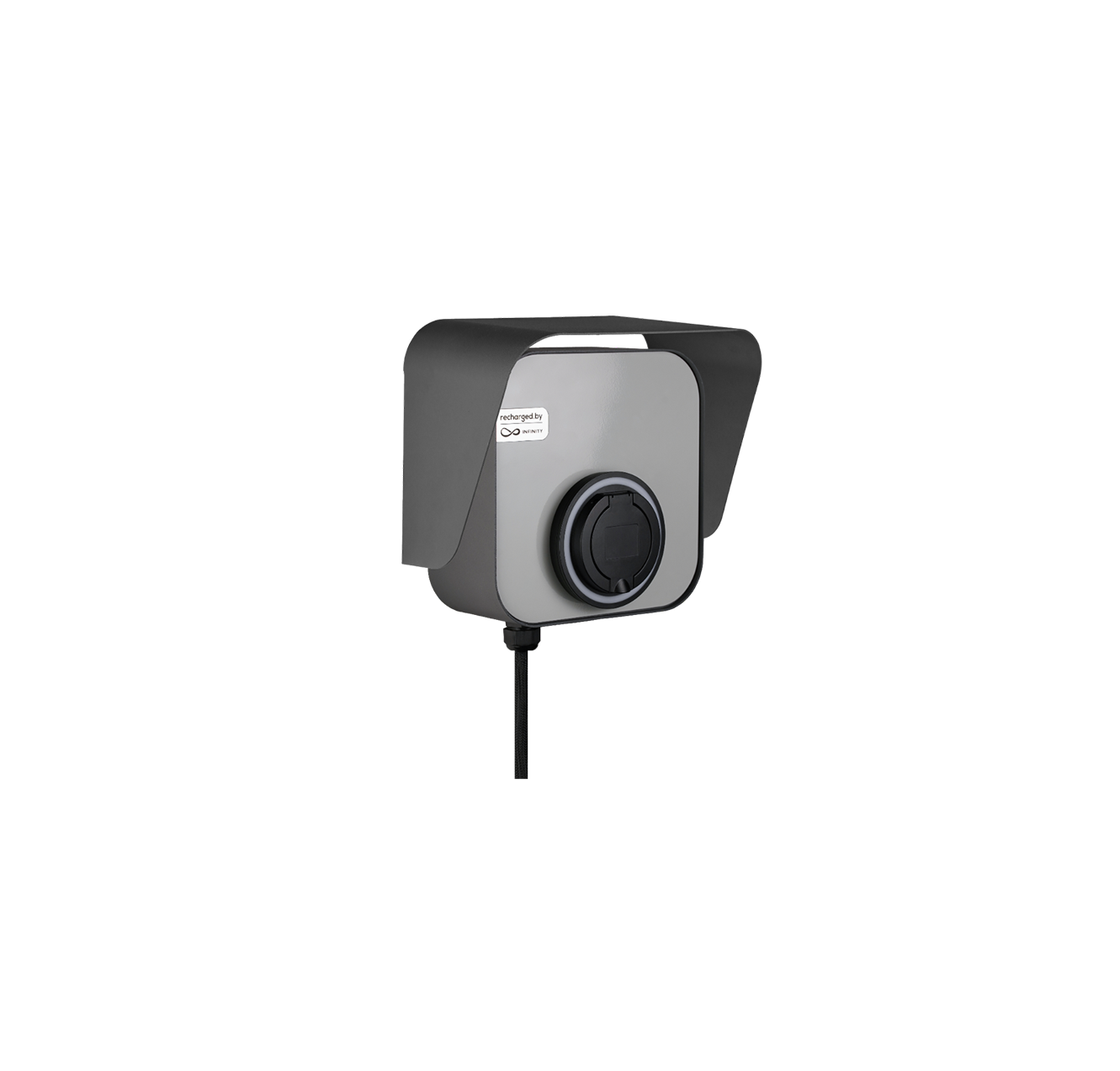
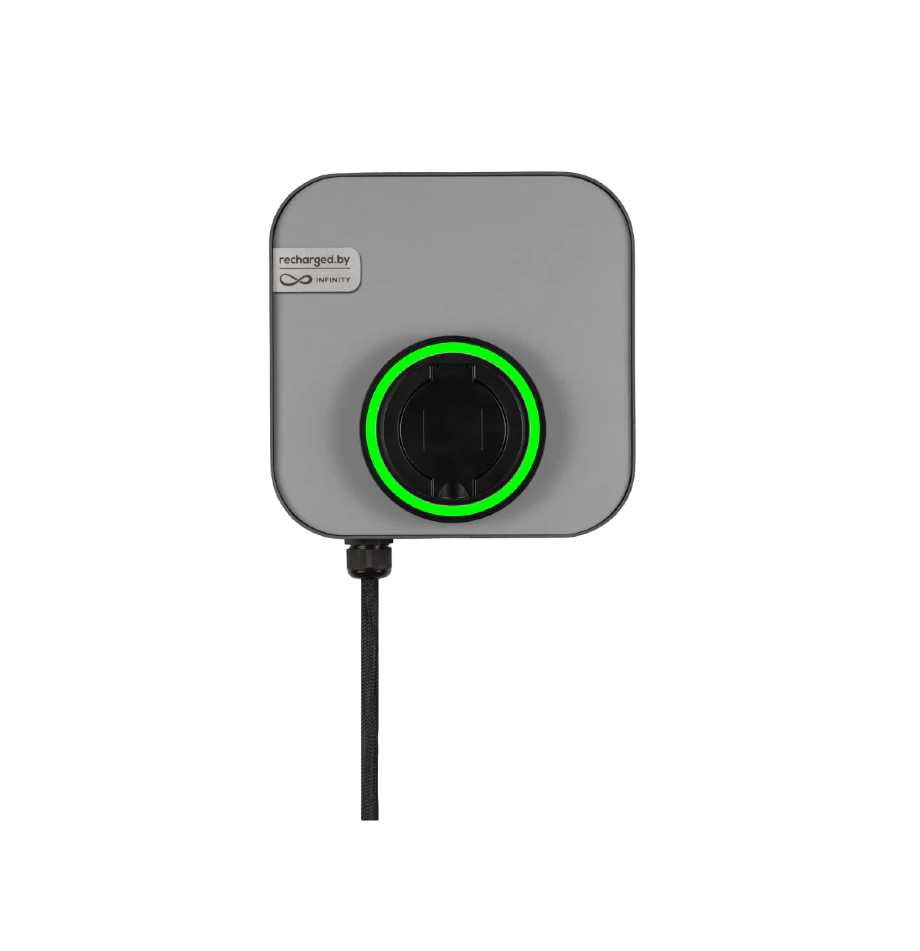
Prime models add Bluetooth and app control. You can schedule charging for the cheapest off-peak hours (after 11pm on most Egyptian tariffs), set charge limits, monitor consumption, and start or stop a session from your phone. If you commute predictably and want the cheapest possible cost per kilometre, Prime usually pays for itself within a year.
EV Charging Standards Explained
This is the section most retailers skip. It matters because mixing standards is the most common reason people end up with a charger that won't plug into their car.
Connector Standards You'll See in Egypt
- Type 2 (IEC 62196). The European standard. It's the connector you'll see on Tesla, BMW, Mercedes, MG, Geely, Volvo, Audi, Hyundai, and KIA EVs sold in Egypt. All Recharged by Infinity FlexiCharge stations on this page are Type 2.
- GB/T (GB/T 20234). The Chinese standard, used on BYD Han, BYD Atto 3, BYD Seal, Dongfeng Voyah, Forthing, and JAC EVs. The wall unit on a FlexiCharge is still Type 2 — you use a Type 2-to-GB/T adapter cable to connect to a Chinese-standard car.
- Type 1 (SAE J1772). Older American/Japanese standard. Rare in Egypt today but you'll see it on older Nissan Leafs and some imported vehicles. Adapter cables exist if needed.
- CCS2 (Combined Charging System). Used for DC fast charging on most European and Korean EVs. You don't need a CCS2 cable at home — it's a public-station feature.
- CHAdeMO. Older DC fast-charging standard, still on older Nissan Leafs. Available at some Infinity stations.
Power Ratings — What kW and A Actually Mean
A charger's power output is measured in kilowatts (kW). The current it draws is measured in amperes (A). The voltage is fixed at 220V single-phase or 380V three-phase in Egypt.
The math is straightforward. A 7kW charger draws roughly 32A on single-phase 220V. A 22kW charger draws 32A per phase on three-phase 380V (so 96A combined). This is why a 22kW install needs a heavier cable run and often a dedicated breaker — and why your electrician needs to confirm your main panel can handle the load before installation.
Safety Standards to Look For
Look for IP54 rating as a minimum (dust and splash resistant) and IP56 if your charger is mounted outdoors with full sun and rain exposure. RCD (Residual Current Device) protection should be built into the charger or installed in your panel — it's the safety device that cuts power if the cable insulation fails. All FlexiCharge units include built-in earth-leakage protection in addition to whatever's in your home panel.
7kW vs 22kW Comparison
This is the most common question we get, so here's the direct answer.
| Feature |
FlexiCharge 7kW |
FlexiCharge 22kW |
|
Power output |
7 kW |
22 kW |
|
Electrical supply needed |
Single-phase 220V |
Three-phase 380V |
|
Range added per hour |
~40 km |
~130 km |
|
Full charge (60kWh battery) |
~7 hours |
~3 hours |
|
Typical hardware price |
EGP 21,999 (Eco) / EGP 29,415 (Prime) |
EGP 23,940 (Eco) / EGP 31,350 (Prime) |
|
Typical install cost |
EGP 4,000–7,000 |
EGP 6,000–10,000 |
|
Panel upgrade needed? |
Rarely |
Sometimes, if no three-phase exists |
|
Cars that benefit fully |
Most EVs sold in Egypt |
Tesla, Mercedes, Hyundai/KIA, BMW |
|
Best for |
Daily home use, apartments, average commute |
Villas, heavy commuters, two-EV households, future-proofing |
When 7kW Is the Right Answer
You drive an average of 30–80 km a day. Your apartment or villa has single-phase 220V. You charge overnight while you sleep. Even a half-empty 60kWh battery refills comfortably between 11pm and 6am on a 7kW unit. Most Egyptian EV owners are in this bracket — 7kW is the default for a reason.
When 22kW Is the Right Answer
Your home has three-phase 380V. You drive long distances most days, or you share the charger with a second EV in the household, or you sometimes only get a couple of hours at home before heading out again. The 22kW unit refills a 60kWh battery in around three hours, which is enough to turn a quick dinner stop at home into a full top-up.
When 22kW Doesn't Pay Back
You drive a car capped at 7kW on AC (like the MG4 EV or Geely Geometry C). You don't have three-phase supply, and the cost of a panel upgrade plus the more expensive charger pushes your project past EGP 50,000 for no real-world speed gain.
If you're future-proofing for a vehicle change in the next 2–3 years, the 22kW Prime is a defensible long-term call. If not, the 7kW Eco is the smarter buy.
Home Charging Guidance
How the Installation Works — From Purchase to First Charge
XPRS sells you the charger. Recharged by Infinity handles the installation directly. Here's the actual sequence once you place an order with us.
A note on installation. XPRS sells the hardware. Installation is handled directly by Recharged by Infinity — their certified engineers carry out the site survey, mount the unit, run the wiring, and commission the charger after your purchase from XPRS. Infinity'll contact you to schedule everything once your order is confirmed. One vendor for the equipment and warranty (XPRS), one specialist team for the install (Infinity).
What You'll Actually Pay
- Charger hardware (paid to XPRS): EGP 21,999 to 31,350
- Standard installation (paid to Infinity, cable run under 10m, no upgrade): EGP 4,000 to 7,000
- Panel upgrade if your supply needs it (paid to Infinity): EGP 8,000 to 15,000
- Total project (single-phase 7kW, no upgrade): EGP 26,000 to 29,000
- Total project (three-phase 22kW, no upgrade): EGP 28,000 to 38,000
The hardware price is fixed and visible on each product page above. Installation pricing is set by Infinity and confirmed in the site-survey quote you receive after purchase. The ranges shown here reflect Infinity's typical residential pricing across greater Cairo (Cairo, Giza, New Cairo, 6th of October, Sheikh Zayed). Coastal installs (Alex, North Coast, Sokhna, El Gouna, Hurghada) sometimes run higher due to travel time.
Apartment Buildings — What's Realistic
If you own an apartment with a fixed garage or a dedicated parking spot, installation is usually straightforward — Infinity runs cable from your unit's electrical panel to the parking spot. If you only have street parking or a shared lot without a deeded space, a home charger isn't currently practical. In that case, public charging at malls, hotels, and Infinity/Elsewedy stations is the realistic plan until your building installs shared infrastructure. Infinity's surveyor can also advise on building-management approvals when those are needed.
Cost to Charge — What Driving Actually Costs
On the standard residential electricity tariff (around EGP 1 per kWh at the relevant consumption bracket), charging a 60kWh battery from empty costs roughly EGP 60. That refills around 350 km of real-world range — which works out to about EGP 0.17 per kilometre. A petrol car with the same range and 8L/100km fuel economy costs roughly EGP 1.30 per kilometre at current Egyptian fuel prices.
Public charging is more expensive. AC public stations charge EGP 1.69 to 1.86 per kWh. DC fast stations charge EGP 2.50 to 3.50 per kWh. The math still favours EVs against petrol on long trips, but the gap narrows. Home charging is where the savings live.
If your daily drive is 50 km, your monthly electricity bill from charging will sit somewhere around EGP 250 to 300. That's the real cost of ownership for an Egyptian EV driver who charges at home.
EV Charging Cable Guide
The wall-mounted FlexiCharge is one half of the system. The cable that connects it to your car is the other half. Here's how to pick the right one.
Which Cable You Need
Pick the cable based on the car you drive. The wall unit doesn't change.
|
Car brand |
Connector at the car |
Cable you need |
|
Tesla (Model 3, Model Y) |
Type 2 |
Type 2 to Type 2 (5m, 32A, 22kW) |
|
BMW, Mercedes EQ, Audi e-tron |
Type 2 |
Type 2 to Type 2 |
|
MG (MG4 EV, MG ZS EV) |
Type 2 |
Type 2 to Type 2 |
|
Geely Geometry C |
Type 2 |
Type 2 to Type 2 |
|
Volvo EX30, EX40 |
Type 2 |
Type 2 to Type 2 |
|
Hyundai Ioniq 5, KIA EV6 |
Type 2 |
Type 2 to Type 2 |
|
BYD (Han, Atto 3, Seal) |
GB/T |
Type 2 to GB/T (5m, 32A, 22kW) |
|
Dongfeng Voyah |
GB/T |
Type 2 to GB/T |
|
Forthing |
GB/T |
Type 2 to GB/T |
|
JAC e-JS4 |
GB/T |
Type 2 to GB/T |
Why 32A / 22kW Cables, Even If You Have a 7kW Charger
You want the cable rated above your charger's maximum, not at it. A 32A cable runs cooler under continuous load, lasts longer, and gives you headroom if you later upgrade to a 22kW unit. The cost difference between a 16A and a 32A cable is small. Buy once, buy properly.
Cable Length
5 metres covers most home installations comfortably — long enough to reach a car parked at any angle, short enough to coil neatly when not in use. Longer cables (7m or 10m) exist but are more expensive, heavier to handle, and lose slightly more energy as heat. Unless your parking spot is unusually far from the wall unit, 5m is the practical choice.
Cable Care
Keep the connector clean and dry. Coil the cable loosely after each use — tight bends shorten its life. Don't run a car over it. If the outer insulation gets cut or scraped to the point you can see the inner conductors, stop using it and contact us for a replacement. Infinity cables are rated for thousands of charge cycles, but they're consumable parts.
Frequently Asked Questions
How much does an EV charger cost in Egypt?
The Recharged by Infinity FlexiCharge range runs from EGP 21,999 for the Eco 7kW to EGP 31,350 for the Prime 22kW (paid to XPRS). Installation is handled by Infinity and quoted separately after their site survey — typically EGP 4,000 to 7,000 for a single-phase 7kW setup, or EGP 6,000 to 10,000 for a three-phase 22kW setup. If your home needs a panel upgrade to add three-phase supply, Infinity will quote another EGP 8,000 to 15,000. Total typical projects land between EGP 26,000 and EGP 50,000.
Can I install an EV charger at home in Egypt?
Yes. Single-phase home chargers up to 7.2kW are exempt from EgyptERA permits for residential use. Higher-power three-phase installations typically need notification to your local distribution company, which Infinity's installation team handles for you after you buy the charger from XPRS. The install itself usually takes one day for a 7kW unit and around 1.5 days for a 22kW unit.
Is it cheaper to charge an EV at home or at a public station?
Home is significantly cheaper. At Egypt's residential tariff (around EGP 1 per kWh), a full charge of a 60kWh battery costs roughly EGP 60 and refills around 350 km. Public AC stations charge EGP 1.69 to 1.86 per kWh. Public DC fast stations charge EGP 2.50 to 3.50 per kWh. If you can charge at home, do — the cost difference over a year is substantial.
How long does it take to charge an EV at home?
A 7kW charger refills a 60kWh battery from empty in about 7 hours. A 22kW charger does the same in around 3 hours. Most owners don't charge from empty, though — a typical overnight session adds 100–200 km of range and only takes a few hours.
What's the difference between Level 1, Level 2, and DC fast charging?
Level 1 uses a standard household socket, adds about 10 km of range per hour, and is only practical as a backup. Level 2 covers everything from 3.7kW to 22kW — this is what you install at home and what you'll find at malls and hotels. Level 3 is DC fast charging at 50kW or more, found only at public stations like Infinity and Elsewedy Plug, and it's used for long-distance travel.
Which Recharged by Infinity FlexiCharge model should I choose?
For most Egyptian homes — single-phase 220V supply, daily commute under 100 km, one EV in the household — the FlexiCharge Eco 7kW is the practical answer. If you have three-phase 380V, drive long distances, or want app control and scheduling, step up to the Prime 22kW. The two middle options (Eco 22kW, Prime 7kW) cover specific cases: Eco 22kW if you have three-phase but don't need the app, Prime 7kW if you want app control on single-phase.
Do I need a Type 2 or GB/T cable?
Type 2 if you drive a Tesla, BMW, Mercedes, MG, Geely, Volvo, Hyundai, or KIA. GB/T if you drive a BYD, Dongfeng, Forthing, or JAC. The wall unit stays the same — only the cable changes. If you switch brands later, you only replace the cable.
Are EV chargers safe in Egyptian heat and humidity?
Yes, when they're rated properly. The FlexiCharge Eco models carry an IP56 rating (full dust protection plus high-pressure water spray resistance) and Prime models carry IP54. Both handle Egyptian summers, coastal humidity, and brief rain without issues. They're not designed for direct submersion, so don't mount them at ground level in flood-prone spots.
How long is the warranty?
Two years on FlexiCharge Eco models, three years on FlexiCharge Prime models. Warranty service is handled inside Egypt — XPRS for hardware-related claims, Infinity for installation-related service. No shipping units overseas.
How do I find a public EV charging station near me?
The Recharged by Infinity app, the Elsewedy Plug app, and PlugShare all show live availability. Coverage is strongest in Cairo, Giza, Alexandria, the North Coast, Ain Sokhna, and El Gouna. Long-distance trips on the Cairo–Alex and Cairo–Sokhna highways are well-served; routes to Upper Egypt are still thin.
Can I pay in installments?
Yes — XPRS offers 0% interest plans on the charger hardware through CIB, Banque Misr, and Valu (typically 6, 12, or 18 months). The installation cost is invoiced separately by Infinity after the site survey; ask their team about installment options for the install portion.
What happens if I move house?
The wall unit can be uninstalled and reinstalled at a new property. The wiring at the old property stays where it is. Contact Infinity directly to arrange relocation.